MEAN STATIONS is our new blog series based on Berlin’s favourite U-Bahn stations and our T shirts that represent them.
We have created a streetwear brand that Berliners, and anyone who loves Berlin as much as we do, can recognise instantly. Every piece carries subtle references to the city’s many layers of history. From past to present, our designs reflect a city that is always in motion.
Carry the city with you wherever you go with our camouflage T-shirt series. This streetwear is based on Berlin’s U Bahn urban jungle pattern and the colours of four key U-Bahn stations in Berlin.
What is your favourite U-Bahn station in Berlin? Which one will you choose to represent?
Berlin’s Urban Jungle: The Story Behind the U-Bahn’s Camo Pattern
Let’s talk about something Berliners see every day- the iconic transport seat pattern. It’s a wild, abstract, slightly chaotic print you see every time you take the train. We all know the designers of chairs we can’t afford but the U-Bahn seats, we sit on most, we often don’t know.
So, who is the pioneer of the famous urban jungle camouflage? That would be Herbert Lindinger.
He began designing subways in 1960 whilst at the University of Ulm. His first commission was for Hamburg’s transport system, then the largest in West Germany. After gaining years of experience, Lindinger, in the 1980s, designed the S-Bahn trying to involve the typical Berliner as much as possible. There was even voting on the colour schemes.
That’s when he developed the camo pattern, later nicknamed urban jungle by Berliners. Once critisised as too aggressive it is now iconic. Die Zeit even listed it among the Milan’s panettone and New Yorks Anthora Cup as the true landmarks of the metropolises. The worm design was originally intended to deter graffiti on the seats as it made it difficult to see.
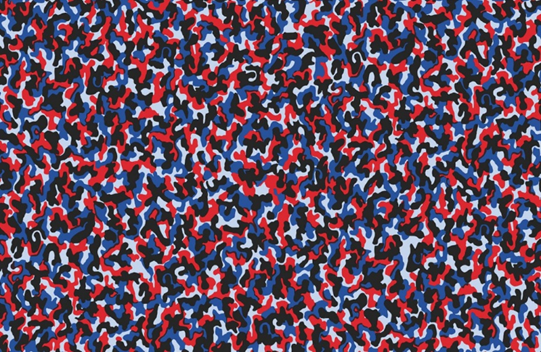
We’ve used this iconic urban jungle camo pattern on our T-shirts but changed the colours to represent specific stations.
The Kottbuser Tor T-Shirt: U-Bahn Inspired Streetwear
To kick MEAN STATIONS off, this week’s blog will be on our Kottsbuser Tor T shirt.
We’ve matched the camouflaged ‘MEAN’ logo to the iconic tones of Kotti’s U-Bahn station. It’s muted pastel tiles of light beige, pale pink, light tan and dusty mauve capture a retro, slightly worn aesthetic that’s instantly recognizable. We knew these colours would be perfect for a streetwear drop, subtle but bold.
Our T shirt also features Kotti’s coordinates on the neckline as another subtle homage to the place that inspired it.
Kottbuser Tor History: From Berlin’s City Wall to Kreutzberg’s Street Culture
Kottsbuser Tor is part of a square intersection in the lively district of Kreuzberg. Berliner’s love nicknames so everyone call it ‘Kotti’. It’s loud and hectic with queues of cars squeezing across the intersection and the subways roaring on an elevated track.
It has many layers of history as most of Berlin does. Historically, the original Kottbusser Tor was a southern gate to Berlin, leading through Neukölln to the town of Cottbus. Many Berliners don’t know about Cottbus and when asked, people mentioned Energie Cottbus football club and Brandenburg University. Not many people know the deeper connection to what we know as Kotti.
The station is one of Berlin’s oldest, part of the original U-Bahn line from Potsdamer Platz to Stralauer Tor that was built in 1902. The old gate controlled trade from Cottbus and Dresden before the city wall was removed in 1865.
The area was heavily bombed during WW2. Kreuzberg and Kotti, had dense housing blocks and rail that made it a target so many buildings were destroyed or damaged. After the war, large parts of Kotti were left in ruins and rubble women helped rebuild.
Kotti and the surrounding areas have a long history of activism. Since the 1970s, Kreuzberg has been a center for leftist and anarchist movements and Kotti itself was central in squatting and anti-gentrification efforts. From the 1970s to the 1990s, activists occupied buildings to protest housing shortages. The squats became hubs for political movements, art, and community life, shaping Kreuzberg’s radical identity and resistance.
Kottbusser Tor in 2025: Multicultural life, Activism and the Street
Kotti sits directly in the energetic and layered district of Kreutzberg. It is a place where languages and cultures mix, political stickers cover lampposts, and the bars are open all night! Putting in a good case for being our favorite area of Berlin, it offers a unique atmosphere and experience.
The area reflects the amazing multicultural identity of Berlin we all love. It is a hub for immigrant communities, especially Turkish and Arab populations. As you walk through Kotti, you’ll hear a mix of languages- German, Turkish, Arabic and English- on street corners and in restaurants and late-night Spatis.
The strong history of activism continues today. The Kotti and Co protest group is one good modern example. Formed in 2012, it takes a stand against ever-growing rent prices and the displacement of lower income residents. Their protest structure, a wooden hut called the Gecekondu is located near the station, is a political symbol and a community space.
Kotti has seen many recent demonstrations including refugee rights marches, LGBTQ solidarity rallies, Anti-police brutality protests as well as annual May 1st protests. Despite gentrification, Kottsbusser Tor stays raw and resistant. Murals, protests and graffiti illustrate ongoing movements from housing, migrant rights to world politics. In 2025, Kotti isn’t just a station, it’s one of the cultural and political centres of Berlin, trying to keep its identity in a city that’s constantly changing.
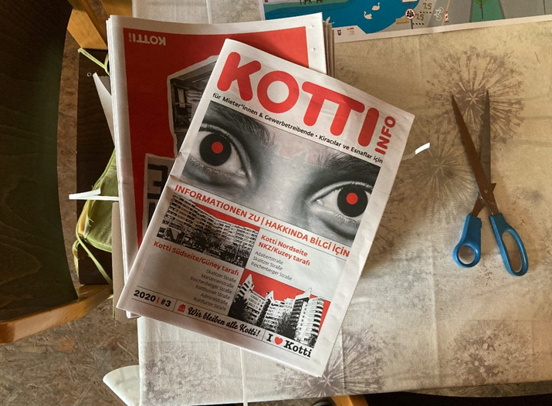
The neighbourhood newspaper with a focus on activism surrounding Kotti.
Top Things to do Near Kottbusser Tor:
Explore local food spots and try the doner from one of the many Turkish takeaways.
Go to Sudblock, a bar and cultural space with events, DJs and political gatherings. There are also open mic nights.
Visit the Kotti and co protest structure to learn about housing activism and Berlin’s rent crisis.
Shop at Turkish and Arab markets to get fresh produce, spices and snacks.
Bar crawl through dive bars in the surrounding streets.
If you’re like us and love photography, wander through the side streets to see graffiti or take photos of the elevated U1 tacks with urban backdrops.
What’s Next?
Kotti is just the beginning. Each drop in the MEAN STATIONS series will continue to explore Berlin’s U-Bahn stations through streetwear places that shaped us, challenged us, and continue to define us and the city.
Next up is Ernst Reuter Platz.
Until then, check out the Kotti T and tell us which station you’ll wear on our Instagram. Also check out our Pinterest. We’re always looking to hear from people who love our city!
Thank you,
