We’re back this week to talk about Hallesches Tor U-Bahn station and how the historic spot in Kreutzberg inspires our streetwear. We believe that streetwear should reflect society and culture, and we try and do this with all our clothing. This district is front and centre of that.
Hallesches Tor is a symbol of Kreuzberg’s energy, history and constant reinvention. From lost city gates to flying railways, protests and parades we’ll discuss it all here!
Our Vibrant Hallesches Tor T-shirt
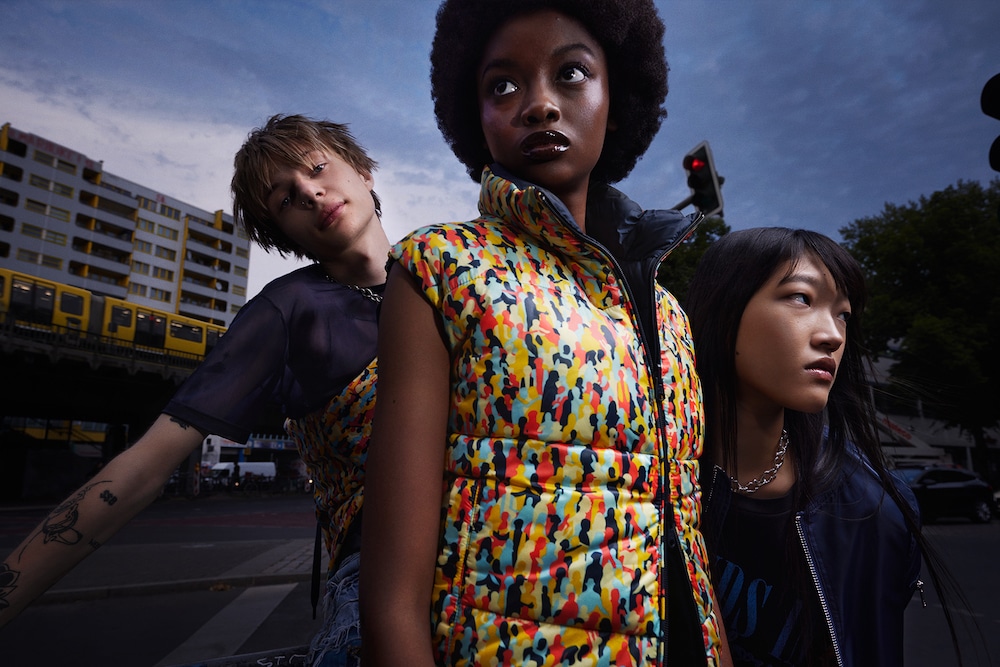
Our Hallesches Tor T-shirt takes direct inspiration from the U-Bahn station and the surrounding area. The colours of the urban jungle camo in the ‘MEAN’ logo include icy blue, bright red and dark blue- the same bold tones you’ll catch when you’re waiting for the U-Bahn.
Unlike our bolder and high contrast Ernst Reuter Platz T-Shirt, this one is loud, bold and high contrast. It reflects the energetic and urban nature of the area. The Kreuzberg edge and chaotic layers of history are represented through our design. Herbert Lindinger’s urban camo camouflage design for U-Bahn seats that we use on our T-shirts works perfectly with the vibe of Kreutzberg and Hallesches Tor- chaotic and vibrant.
From Napoleon to Hallesches Tor U-Bahn station
Hallesches Tor, in Kreutzberg, wasn’t always a U-Bahn stop. Until 1876, it was the historic Halle Gate of the Berlin Customs wall. Like we’ve talked about with Kotti, these gates once closed at night to keep unwanted people and invading armies out. The gate itself led to a city south of Berlin called Halle that still exists today.
The gate itself, built by King Friedrich Wilhem I in 1730, has witnessed some of Berlin’s pivotal moments. Perhaps the most notable came in 1806, when Napoleon’s armies marched through during the Napoleonic Wars. Signalling Prussia’s defeat and the city’s occupation, the arrival of his forces sent shockwaves through Berlin as royal palaces and government buildings were seized, and the population lived under French control.
Continuing into the late 19th century, the wall came down and Berlin kept expanding. Mehringplatz and the surrounding area developed into a middle-class neigh and a busy residential and commercial area. Continuing through time, in 1901 the train line we know today was erected and is one of the oldest that remains.
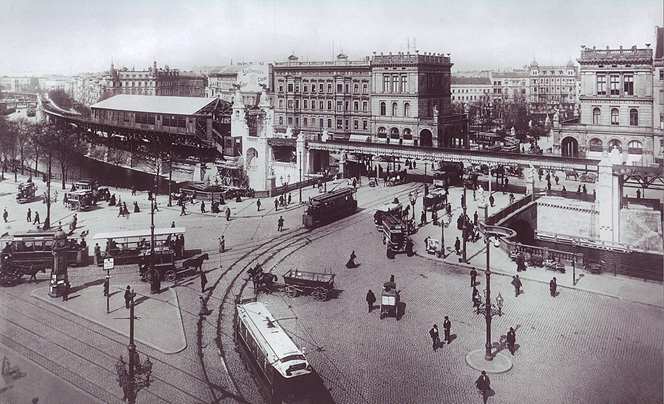
Hallesches Tor in the 1960s
Like much of Berlin, the Second World War changed Hallesches Tor. Allied bombers targeted the area, seeking to destroy bridges across the city to prepare for a soviet land invasion. By 1950, much of what you can see in the photo above had disappeared.
Rebuilding began all over the city and Hallesches Tor in the 1960s. So, in 1962 architect Werner Duttmann developed the modernist housing blocks that now surround the station, an area for government-subsidised housing. If you investiate, you can still find traces of older times, for instance rounded pillars across the road from the station. See if you can find them on your next trip on the U1.
This layering of history, of lost walls and brutalist rebuilds is the essence of Berlin. Hallesches Tor fell to bombs, became a blank slate for new visions and new layers of history. But the U-Bahn ran throughout time and continues today.
The U-Bahn’s Flying Railway
The station’s beauty often slips from memory. But when you look closely, it’s clear why it’s historically listed today. Firstly, it sits on one of the first elevated train lines built in Berlin from 1899-1902. Named the ‘hochbahn’ Berliners, in typical fashion, nicknamed it the ‘flying railway’. It was a futuristic project of steel bridges and riveted beams that cut across the city above the streets.
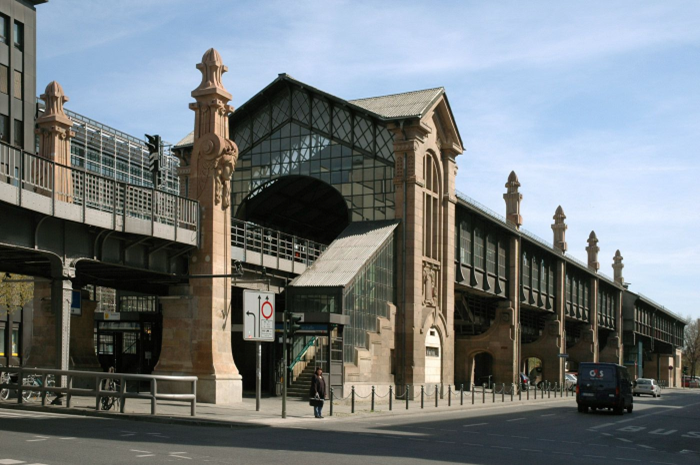
As you ride into Hallesches Tor the train glides by the Landwehrkanal on a viaduct. On the U1 today, the trains carve through Kreuzberg’s bridges, dense houses and chaotic roads. From brutalist buildings, canals and graffiti covered walls you see it all as you fly through the city.
The Modern Day Buzz Around Hallesches Tor
The U-Bahn station is still one of the city’s busiest junctions, connecting the U1 and U6 lines, and funneling people from all over Berlin through Kreuzberg and further.
Hallesches Tor is one of the main locations for the Karneval der Kulturen, Berlin’s annual celebration of diversity, music, and street life. Every summer, the area around the station bursts into color as thousands gather to watch parades, eat street food, and dance late into the night. Beginning in 1996, the Karneval has become a symbol of multiculturalism and tolerance. It was originally a response to xenophobic riots and today remains a place where anyone can be what they want to be. People from different backgrounds and cultures come together to bring their passions, ideas and desires to the streets to share with an open audience.
The area reflects Kreuzberg’s political spirit. Hallesches Tor has long been a hub for protest culture. Demonstrations regularly pass through here on their way to Mehringplatz or across the Landwehrkanal, echoing the district’s deep ties to activism, squatting culture, and left-wing politics. Flyers and graffiti around the station often read like political manifestos.
Next up?
Next week’s post will be on Fehrbelliner Platz U-Bahn station in Wilmersdorf. We’ll talk about its bold colours, architectural statements and the history of a battle fought there.
For now, share your ideas, photos or stories of Hallesches Tor with us on Instagram or Pinterest.